Yongsan Park Officers Housing, Early Summer on Red Brick
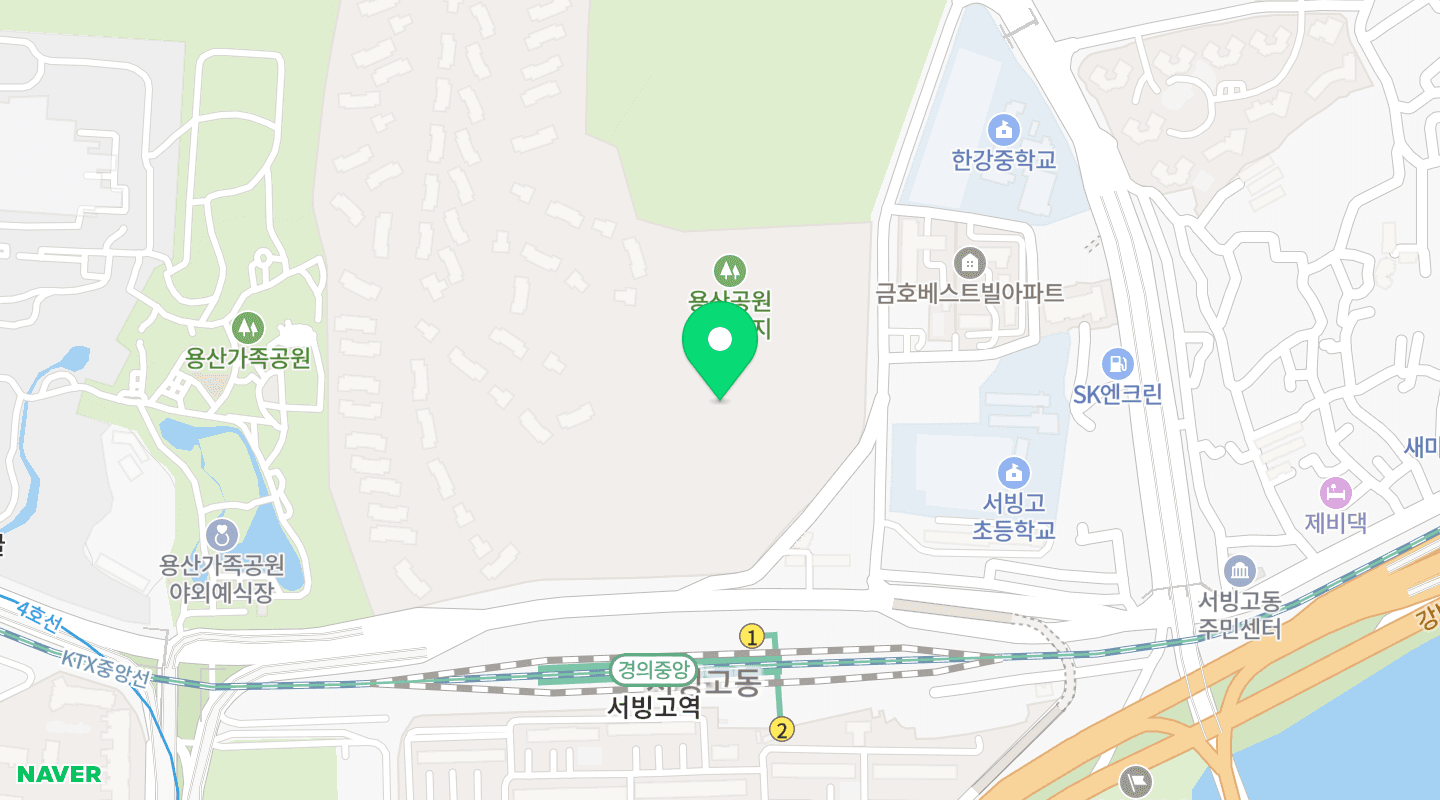
From Seoul, America is one crosswalk away. Step out of Exit 1 at Seobinggo Station and the front gate sits just across the road. On this Saturday in late June, with the monsoon only days off, clouds herd across the sky and split now and then to spill a midsummer sun that has arrived early. In the short wait for the light it settles on the back of your neck, the inside of your collar already damp, your mind already past the wall.
Orange tiled roofs show first beyond the gate. It is easy to assume the Americans built this neighborhood and lived in it. The order is the reverse. This land, pressed against the southeast corner of the Yongsan garrison, came back to Korea early, in 1986, and on it the Korea National Housing Corporation built American-style duplexes and leased them to the US military; officers' families lived here until the end of 2019. Call it an America built by Korean hands and lent out before we ever moved in. If houses carried nationalities, these have held two since the day they were built.
The tenants left, and only then did the landlord first set foot in the yard. That was the summer of 2020, when this became the first piece of returned base land to open into everyday life. Now there is no booking and no ticket; you simply walk in. Few borders are easier to cross.
Past the gate, the first building is an information lounge called Gillajabi, the guide. I pick up a leaflet with a map inside, and the names printed on it are endearing before anything else: Nadeulmok, Saerok-saerok, Deullae-bomnae, Osondoson, Duru-duru. Read them aloud and they roll around the mouth, soft and round. In a neighborhood of English signboards every new name is pure Korean, so two eras share a single sheet, the language of those who left and the language of those who came back dividing the map between them.
A First Walk Between the Houses
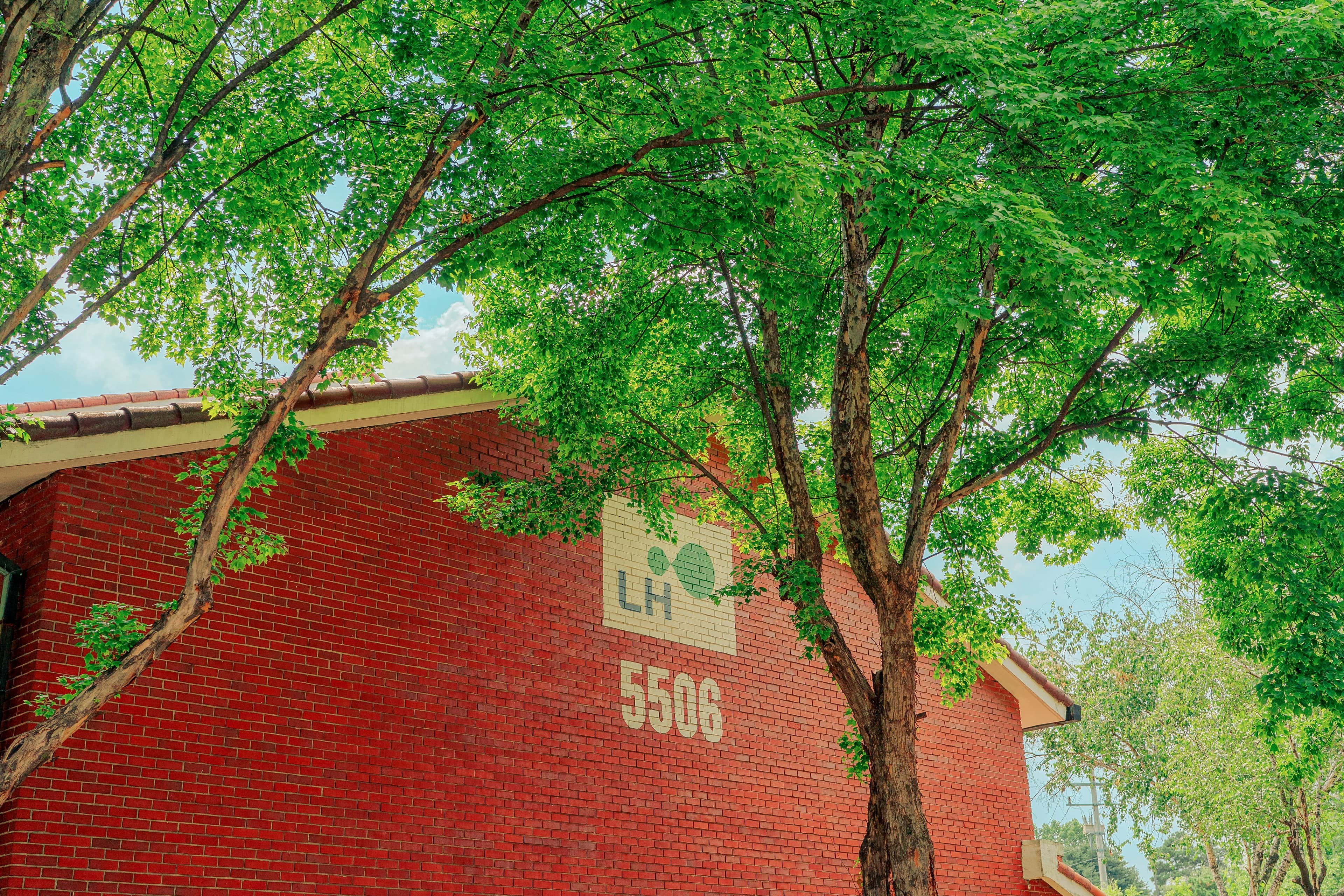
Past the lounge, the neighborhood begins in earnest. Two-story houses of red brick, trees standing well above their roofs, a narrow cement path laid through the grass. Each wall carries a four-digit building number in big white paint. Sunlight comes down through the heavy leaves and scatters over the path like small change, glinting underfoot at every step. From the gate to here is a few dozen paces. Somewhere in between, the country has changed.
Look up and a short brick chimney rises from the ridge of the roof, a thing you rarely meet on a Seoul skyline. With a chimney set on a triangular roof the house's outline drifts one country further away, and the stains on the tiles hold some thirty monsoons this roof has seen through. Only after taking all of that in do I move on, slowly, deeper into the complex.
Early summer or not, the sun that breaks through already belongs to full summer, and parasols open one by one along the path while everyone drifts toward the shaded side. Arriving empty-handed hardly matters. You take an umbrella from the lounge, walk out with it, and slip it back on your way home. On that unspoken promise alone the umbrellas pass from hand to hand, and even a first-time visitor soon carries the look of a regular.
The low brick wall rounds its corner not at a right angle but in a soft curve, like handwriting done without hurry. Two people share one white parasol along that line, shoulders drawn together, while ivy climbs green up the corner of the wall opposite. The air holds two smells in equal measure: brick warmed in the sun, and leaves grown just this spring.
No one hurries here. The walker ahead is slow, so the walker behind slows too, and before long the whole neighborhood is moving to a single tempo. Even the quick city stride you brought along loosens somewhere between the lawns and the curving walls, until nothing is left but the pleasure of wandering.
Walk at that tempo and a song drifts over from the shade. The stage usually stands in the plaza across the way, they say, but today it has settled deeper among the trees, and with camping chairs lined up before it, the clearing looks for all the world like a campsite in the woods.
People in the chairs and people standing at the edge of the shade nod to the same chorus. Applause rises at the end of each song, filtered once through the leaves so that it spreads out rounded. Passersby stop at the rim of the shade meaning to hear one song, and one song becomes two, then three.
Past the stage lies the lawn at the center of the complex. The moment you leave the tree shade the sky opens all at once, and the clouds happen to have pulled back, so light pours down over the whole yard. A few steps in, one hand raised against the glare, the scene finally assembles: open grass ringed by red duplexes and old trees, like a folding screen.
Stand anywhere and a backdrop composes itself, so people dash into the sun, take their few shots, and trot back grinning into the shade. Between light and shadow the crowd swells and recedes like a tide.
Photographer and subject trade places over and over. Voices counting one, two, three overlap across the lawn, and laughter breaks out between the shutter clicks. Everyone seems to have learned, somewhere, that white clothes photograph best against red brick, and waiting out a stranger's photo is nothing unusual in these grounds. A good neighborhood for pictures turns out to mean a place where waiting on other people's pictures feels like nothing at all.
At the mirror, too, everyone stands a moment. Line yourself up and the red house behind you enters the frame, and only after the shot do you read the words printed along the top, YOU ARE SPECIAL, and give a small laugh. For a compliment addressed to everyone who passes, the letters are shy and small. One line of praise, and the walk afterward is a little lighter.
In the flowerbeds, white blossoms and purple ones have come up together. Backlit petals go translucent from the edges in, and half-opened buds hide among the full ones. It is a small garden that draws you down to its own height for a long look.
No one lives in this neighborhood, and the beds are still neatly kept. A beauty that once belonged to the view inside a window now belongs to whoever passes. Not flowers without an owner, but flowers whose owners have multiplied.
The narrow paths between houses belong to couples. Two people enter hand in hand, and over a floor of light chopped fine by the leaves, their shoulders brighten and darken in turn.
There are no shortcuts here and no dead ends. Whichever gap you take, red brick and grass meet you at the far end. A neighborhood where you cannot take a wrong turn, where a wrong turn only hands you a new backdrop. Maybe that is why couples go into these paths meaning to get lost.
The Open House, Door Ajar
The red walls are not only scenery. A few years ago people still lived in these houses. Deeper in the complex, a house with Osondoson on its nameplate keeps its front door open onto that time. A single officer's residence has been left exactly as it was, for anyone to walk into. A rattan rocking chair sits by the door, as if someone had been sunning in it a moment ago and just stepped inside.
Over the threshold the outdoor heat lifts away by a layer, and the dry smell of long-empty wood arrives first. On the white walls hang framed photographs of the family who lived here. Leafing through a stranger's album would be rude anywhere else, but before pictures the owners hung up to be seen, it feels closer to a greeting. I pass along them one by one, meeting every pair of eyes.
In the frames a child stands at a piano, and children crowd a table strewn with toys, wearing ridiculous hats and laughing. So the sounds this room once held are not hard to summon: piano notes, feet drumming down the stairs on school holidays, a television murmuring through the evenings. A household kept inside a foreign country's wall must have missed a great deal, and still every face in the photographs is smiling. A record of the years when longing and laughter lived in one house. Standing under the frames, you borrow someone else's evening for a while.
Out the door, summer again. Eyes tuned to the dim interior take the green of the grass at full strength, and the lifted heat settles back over your shoulders. The dry wood smell follows a few steps, then dissolves into sun-warmed grass. All you did was step into someone else's time and out again, and the afternoon in the yard has tilted a little.
Tracing a Foreign Past
Half the pleasure of walking here hides in the corners. Beyond a stretch of grass stands a red telephone box, a matching red postbox at its side. The door of the box hangs half open, exactly as someone left it, and you find yourself idly picturing the last person who pushed through it.
A telephone box calls Britain to mind sooner than America, but mixed nationalities raise no eyebrows inside this wall. No one steps in to make a call anymore; a line still forms to be photographed in front of it. There are things in this world that outlive their use and go on being loved.
A red classic car rests at the roadside, its squared hood and silver emblem glossy in the sun. Whoever chose it had an eye: the box, the postbox, and the car are matched to the exact red of the brick. A red body beside a red wall, and no one carrying a camera gets past it.
The bins set at the corner of every house look familiar from their bulk alone, the kind you saw in the backyards of American movies, regulation issue from across the sea down to the last trash can. The box and the car may have been placed to be admired, but no one dresses up a trash can. On collection mornings these must have rattled out from every house, and it is offhand corners like this, more than the arranged ones, that pull the lived-in days close.
A line forms at an old road sign, too. Summer grass runs tall at its base, and each time the sun comes through, leaf shadows sway on the red wall behind it. The composition is nothing but a sign and a wall, yet stand there and you come out looking like a passerby in some American town. The quiet power of the real thing, standing since the garrison years.
Along the perimeter road, one whole face of the wall is a painting. On panels of orange and sky blue hang two dogs, one close to a bulldog, one close to a Jindo, two nations' dogs grinning side by side on a single wall with the Pacific between them.
Above the grins, though, barbed wire still coils. A wall wearing a bright mural below and thorned steel above: this land as it stands, only half open. The day the wire comes down, the two dogs will finally look like they are grinning at ease.
A Cafe and a Bench for a Rest
Past midday, the way bends on its own toward the cafe by the lawn. Watching people come out with a cup apiece, you gather everyone had the same idea.
The interior is done up like an old American coffee house, and behind the counter ice rattles into cups. The sound alone cools the throat, and when the iced coffee arrives, the chill of the cup clamps to your palm while the beads of water slide between your fingers. One sip, and the whole distance you have walked settles.
The cafe's boundary is not its door but the far edge of the shade. Carry your cup out and there are benches and chairs under the trees and beside the houses, the entire complex one terrace. Reading the day's sun and wind, choosing your one patch of shade: here, that is the last step of placing an order.
On the long bench in front of a red house, two people are deep in talk, laughter breaking out at intervals, no sign of getting up. While the talk runs on the clouds keep moving, and light comes and goes across their shoulders. Time spent sitting in the shade is measured by the sky, not by a watch. Nothing much happens. The light shifts, the talk continues, the ice melts. That is enough to fill an afternoon.
The Leaning Afternoon
The sun eases westward and, if anything, more people arrive. Light that fell straight down at noon comes in at a slant, lending the brick red its depth, and the houses' shadows creep out across the paths. The heat holds, but the comings and goings have loosened.
Two people walk off toward the end of the lane, their shadows half a step ahead. The same street reads differently in slanted light, and the same wall yields a different picture than it did an hour ago. In a neighborhood where the light never sits still, the longer you stay, the thicker your album grows.
More than a few pass by holding up the hems of white dresses. There is something fine about photographing a promise just beginning in a neighborhood whose household years have ended, and though the shoot is none of your business, you find yourself passing with held breath. Across the road one person poses under a white parasol while another frames the shot, both stopped mid-path, and the green chairs under the trees stay empty however many people arrive. Too many scenes left to gather to sit down just yet.
The children's hour has not come yet. When the sun drops further and the wind cools, this lawn may fill with the sound of running feet. For now the thickest crowd stands under the big tree, where the few degrees between shade and sun register on the skin, and the smell of grass rides the warmed air.
At the Edge of the Park
The exhibition hall inside the complex holds this land's past and its future in one room. Winning photographs from years of contests hang on the walls, and in them the same bricks and lawns you have just walked appear in other seasons, through other eyes. Beside them sits a scale model of the entire Yongsan garrison, and on that crowded field of low roofs, only the spot with the you-are-here marker is lifted slightly on its base.
This neighborhood, which the Americans called Camp Seobinggo, is a palm-sized piece at the model's edge. Walking that one piece took real legwork. How wide, then, is the rest of the board?
A ring road runs the perimeter, walled beyond by barbed wire, and the fact that this opening is only partial becomes something the body registers. Overhead, a concrete utility pole that must have stood since the garrison years rises against a bank of cumulus, its few wires scoring the sky thinly. The rim of a cloud goes blinding white, the sun slides out, and in those few seconds the shadow at your feet deepens.
There are traces underfoot as well: small running figures left on the asphalt. Whole families lived here once, so they read as a warning to slow down for children darting between the houses. The children it warned about are gone, and still someone crouches to photograph the figures, purely because they are sweet.
Spring Magnolias, Summer Green
The broad leaves of the magnolia by the house shine a deep, lacquered green. In spring, they say, people queue to see its white blossoms; summer's green draws no such crowd, and is the more serene for it. Instead, brick red, leaf green, and sky blue stand easily together, three primary colors sharing one view. Count in the maples of autumn and the snow on these roofs in winter, and every season grows its own excuse to come back.
What was once the wall of somebody's house now enters strangers' photographs dozens of times a day. The red of the brick, the white painted number, one black steel rail. By now the sun survives only as patches high on the wall, and each time the wind passes, branch shadows tremble finely across them. The sounds of the lawn arrive here thinned. The blankness is so much like an unfinished painting that, before leaving, you stand in front of it for a long while.
Before the gate I turn around once more. The orange roofs lie sunk among the trees, and faint laughter carries over from the lawn. The smell of sun-warmed brick, applause strained through leaves, the chill of a cup against the palm, the hem of a white dress: the things being left inside the wall today. A few steps out is Seoul again. Two afternoons run side by side with one wall between them. The crosswalk light changes, and behind my back the early-summer day is still in full swing.
Reference
 Open in Naver Map
- Dates: Tuesday to Sunday (closed Mondays)
- Hours: 09:00 ~ 18:00
- Getting there: 5-minute walk from Seobinggo Station (Gyeongui-Jungang Line), Exit 1
- Official site (opens in new tab)